
Online Islamic Studies Classes
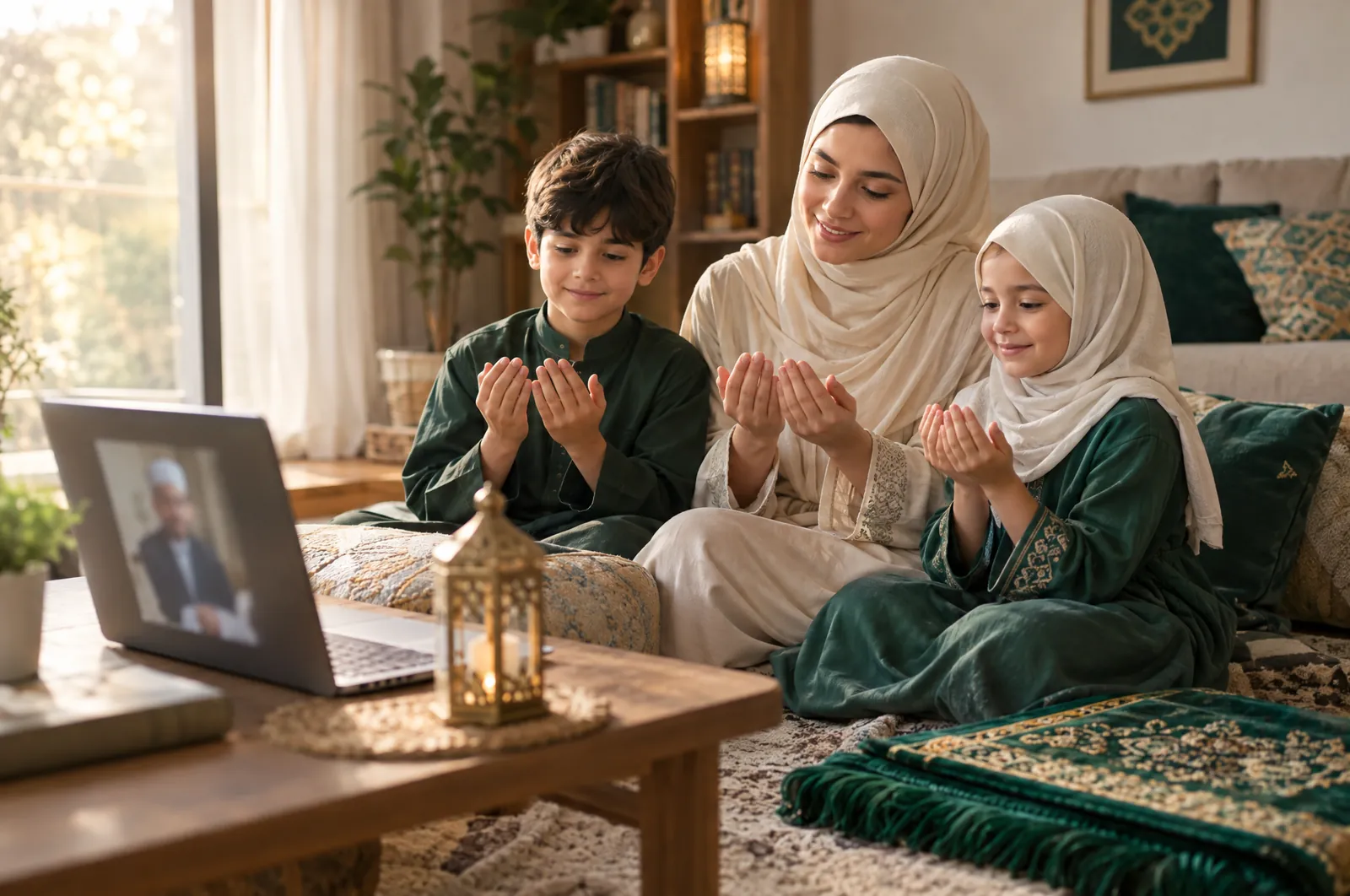
Online Islamic studies classes for kids teach children the core of their faith: what Muslims believe, how to make wudu and pray, the life of the Prophet ﷺ, good manners, and the daily duas a Muslim says from waking up to going to sleep. OnlineQuran24 teaches every lesson live and 1-on-1 over video call, in 30-minute classes planned around your child’s age.
- 1-on-1 live classes with one teacher
- 30 minutes per class, 2 to 5 days a week
- Male or female teacher, your choice
- 24/7 scheduling for any time zone
- 3-day free trial before you pay
What do kids learn in online Islamic studies classes?
Kids learn seven connected subjects: aqeedah (belief), the pillars of Islam and Iman, salah with wudu, seerah, akhlaq and adab, daily and Quranic duas, and the Islamic calendar. Each subject is taught in small steps so a child can explain it in their own words and practice it at home the same day.
Aqeedah basics
Aqeedah is the set of beliefs a Muslim holds. Children start with Tawheed, the belief that Allah is One, the Creator who has no partner, and learn a few of Allah’s names with their meanings, such as Ar-Rahman (the Most Merciful) and Al-Khaliq (the Creator).
Pillars of Islam and Iman
The five pillars of Islam are the Shahadah, Salah, Zakah, Sawm (fasting in Ramadan) and Hajj. The six articles of Iman are belief in Allah, His angels, His books, His messengers, the Last Day, and Qadr (divine decree). Kids learn both lists and what each item means in daily life.
Seerah stories
Seerah is the life story of Prophet Muhammad ﷺ. Children hear it as a sequence of short stories: his birth in Makkah, the first revelation in the Cave of Hira, the Hijrah to Madinah, and his kindness to children, neighbors and animals.
Salah: wudu first, then the prayer
Salah is taught as a practical skill. The child first learns wudu (ablution) in order, then the positions and words of prayer, and shows each step on camera so the teacher can correct it.
- Wudu: intention and Bismillah, wash the hands, rinse the mouth, rinse the nose, wash the face, wash the arms up to the elbows, wipe the head and ears, and wash the feet up to the ankles.
- The five daily prayers: Fajr (2 fard rak’ahs), Dhuhr (4), Asr (4), Maghrib (3) and Isha (4), with their times in the child’s own day.
- Positions: standing (qiyam), bowing (ruku), prostration (sujood), sitting between prostrations, the sitting for tashahhud, and ending with the salam (tasleem).
- Words of prayer: Takbir, Surah Al-Fatiha, a short surah, and the short phrases said in ruku and sujood, memorized with their meanings.
Akhlaq and adab
Akhlaq is good character and adab is good manners. Children learn concrete habits: saying salam, eating with the right hand, respecting parents and elders, telling the truth, keeping promises, sharing, and the manners of the masjid, the home and the bathroom. Each habit comes with a short story that explains the reason behind it.
Islamic months and events
The Islamic (Hijri) calendar is lunar and has 12 months, from Muharram to Dhul Hijjah. A lunar year is about 11 days shorter than a solar year, so Ramadan and the two Eids move earlier each year. Kids learn the month names in order and the events tied to them: fasting in Ramadan, Laylat al-Qadr in its last ten nights, Eid al-Fitr on 1 Shawwal, Hajj and Eid al-Adha in Dhul Hijjah, and the Day of Ashura on 10 Muharram.
Daily duas and Quranic duas for kids
Duas are short supplications to Allah, and memorizing them is the part of Islamic studies children use most often. In class, a child learns each dua with its meaning and the exact moment to say it, repeats it with the teacher, and then uses it at home until it becomes a habit.
Daily duas children memorize first
| When | Dua (transliteration) | Meaning |
|---|---|---|
| Before eating | Bismillah | In the name of Allah |
| After eating | Alhamdu lillahil-ladhi at’amana wa saqana wa ja’alana muslimin | All praise is for Allah who fed us, gave us drink and made us Muslims |
| Waking up | Alhamdu lillahil-ladhi ahyana ba’da ma amatana wa ilayhin-nushur | All praise is for Allah who gave us life after causing us to die, and to Him is the return |
| Before sleeping | Bismika Allahumma amutu wa ahya | In Your name, O Allah, I die and I live |
| Leaving home | Bismillahi tawakkaltu ‘alallah, wa la hawla wa la quwwata illa billah | In the name of Allah, I trust in Allah; there is no power and no strength except with Allah |
| Entering the bathroom | Allahumma inni a’udhu bika minal-khubuthi wal-khaba’ith | O Allah, I seek refuge in You from the male and female evil ones |
| Leaving the bathroom | Ghufranak | I ask for Your forgiveness |
Quranic duas with their meanings
Quranic duas are supplications that appear in the Quran itself. Children learn them word by word, which also builds Arabic vocabulary.
رَبِّ زِدْنِي عِلْمًا
- Rabbi zidni ‘ilma (Ta-Ha 20:114): “My Lord, increase me in knowledge.” Many children say it before every lesson.
- Rabbish-rah li sadri wa yassir li amri (Ta-Ha 20:25–26): the dua of Prophet Musa asking Allah to open his chest and make his task easy.
- Rabbana atina fid-dunya hasanatan wa fil-akhirati hasanatan wa qina ‘adhaban-nar (Al-Baqarah 2:201): a request for good in this life and the next, and protection from the Fire.
- Rabbir-hamhuma kama rabbayani saghira (Al-Isra 17:24): “My Lord, have mercy on them as they raised me when I was small,” a dua for parents.
Older children then move to the protective surahs and verses Muslims recite every day, such as the 4 Qul surahs and Ayat ul Kursi, and to supplications for specific needs like Dua e Hajat. A typical pace is one new dua a week, with every earlier dua reviewed so nothing is forgotten.
How are Islamic studies lessons planned by age?
Lessons are planned by age because a 5-year-old and a 12-year-old need different depth, vocabulary and activities. The teacher places your child during the free trial and adjusts the plan as the child progresses; the age groups below show the usual focus.
Ages 4 to 6
Allah as the Creator, the Kalimah, salam and basic manners, the names of the five prayers, and the shortest daily duas such as Bismillah and Alhamdulillah. Lessons use pictures, short stories and lots of repetition.
Ages 7 to 9
Wudu and salah practiced step by step, the five pillars and six articles of faith, seerah stories in order, and the full set of daily duas. The Prophet ﷺ told parents to teach their children to pray at seven, so this stage centers on prayer.
Ages 10 to 13 and teens
What breaks wudu, the basic rules of fasting, the meaning of what is recited in salah, a seerah timeline, Quranic duas with word meanings, and the Hijri calendar. Teens also discuss the questions they meet at school and online.
What happens in a 30-minute Islamic studies class?
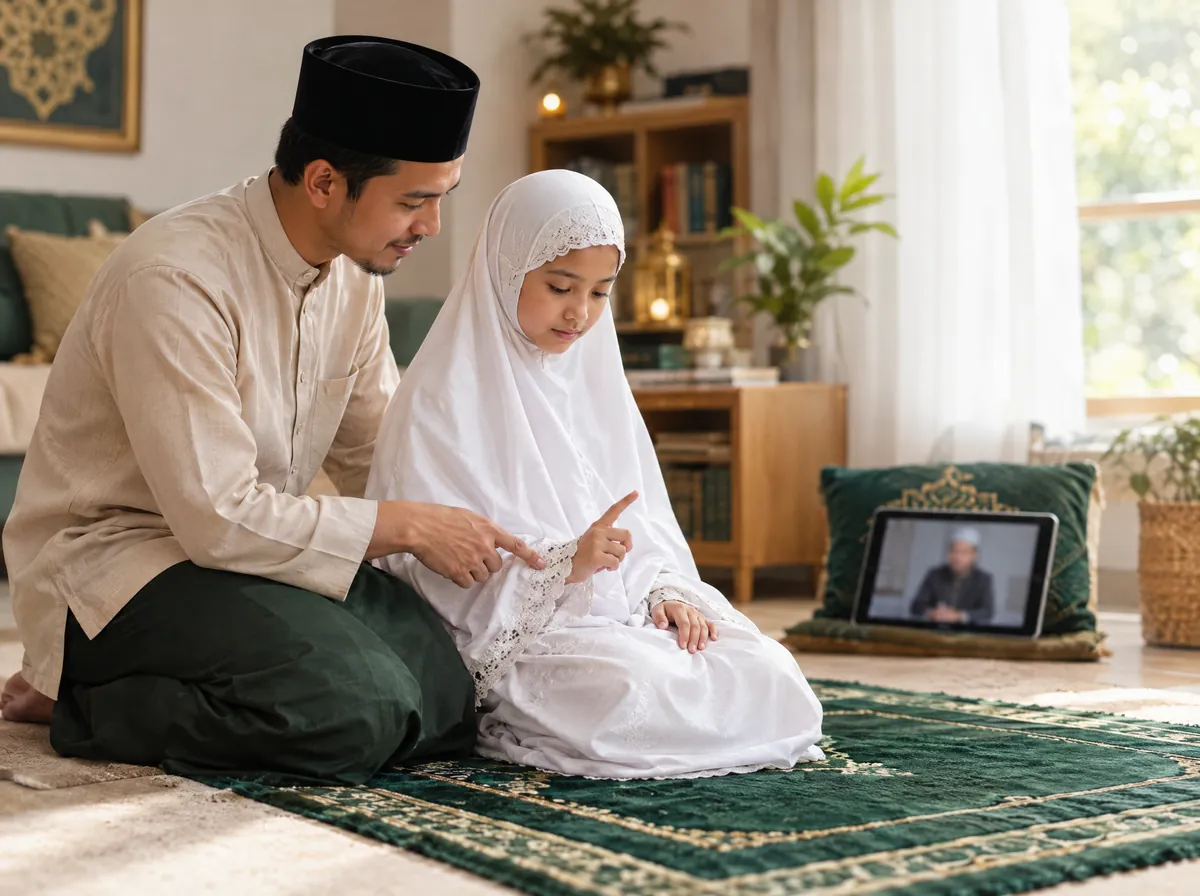
A 30-minute Islamic studies class follows a fixed rhythm of review, new learning, practice and a home task. The fixed rhythm helps young children know what comes next and keeps their attention for the full class.
- Minutes 0–5: salam, Rabbi zidni ‘ilma, and recitation of the duas learned so far.
- Minutes 5–15: the new topic, such as one pillar of Islam, one step of wudu or one seerah story.
- Minutes 15–22: practice on camera: showing a salah position, retelling the story, or answering short questions.
- Minutes 22–27: the dua of the week, with its meaning and when to say it.
- Minutes 27–30: a small home task, for example saying the leaving-home dua every morning, and a note for parents.
How does Islamic studies fit with your child’s Quran learning?
Islamic studies explains the faith, while Quran classes teach a child to read and recite the words of Allah, and the two support each other. A child who is learning to read Arabic through the Noorani Qaida course recites duas more accurately, and a child who knows the seerah understands the background of the surahs they recite.
Many families combine both inside one weekly plan as part of their child’s online Quran classes for kids; ask on WhatsApp how to split the days. Older children who want to understand what they recite can continue with Quranic Arabic classes and later the online Tafseer course, which explains the meaning of the Quran verse by verse.
Who teaches, and how are parents involved?
Your child learns with one teacher in a private video class, and you choose a male or a female teacher. Girls can study with a female teacher only. Parents are welcome to sit in on any class, and many sit in during the first weeks to hear the duas and steps their child is learning.
- Classes run 24/7, so you book a time that suits your family’s time zone and school day.
- The teacher tracks which duas your child has memorized and which topics are complete, and shares progress with you.
How much do online Islamic studies classes cost?
Online Islamic studies classes for kids cost $40–$88 a month, depending on how many 30-minute classes your child takes each week. The fee depends only on the number of days, and every plan starts with a 3-day free trial.
2 classes / week
8 live 1-on-1 classes a month · 30 min each
$40 / month
£28 · C$52 · $5.00 per class
- Duas, salah and manners at a gentle pace
- Male or female teacher
- Parents can sit in
Most popular
3 classes / week
12 live 1-on-1 classes a month · 30 min each
$54 / month
£42 · C$72 · $4.50 per class
- Lessons planned by your child’s age
- Male or female teacher
- Progress shared with parents on request
- 3-day free trial first
4 classes / week
16 live 1-on-1 classes a month · 30 min each
$71 / month
£52 · C$92 · $4.44 per class
- More room for salah practice on camera
- Parents can sit in
- Class times 24/7, any time zone
5 classes / week
20 live 1-on-1 classes a month · 30 min each
$88 / month
£60 · C$115 · $4.40 per class
- Room to combine Islamic studies and Quran
- Male or female teacher
- Lowest price per class
Three classes a week suit most children, with time to practice each dua at home between classes. See every plan and currency on the Quran class fees page; the 3-day free trial comes first, so you pay only after your child has met the teacher.
Frequently asked questions
What age can my child start online Islamic studies classes?
A child can start once they can follow a 30-minute video call with a teacher, which for many children is around age 4 or 5. The 3-day free trial shows whether your child is ready and which level fits.
Which duas will my child memorize?
Children start with daily duas for eating, sleeping, waking up, leaving home and using the bathroom, then learn Quranic duas such as Rabbi zidni ‘ilma and Rabbana atina, and later the 4 Qul surahs and Ayat ul Kursi. Each dua is taught with its meaning and the moment to say it.
Can my daughter learn with a female teacher?
Yes. Families choose a male or female teacher, and girls can study with a female teacher only.
Can I sit in on my child’s Islamic studies class?
Yes. Parents may sit in on any of their children’s classes, which also helps you continue the duas and salah practice at home.
Can my child study Islamic studies and Quran together?
Yes. Islamic studies and Quran reading complement each other. Message us on WhatsApp to arrange how your child’s weekly classes are divided between the two.
- Online Quran classes for kids
- Noorani Qaida course
- Quranic Arabic classes
- Online Tafseer course
- Fees and plans
Start online Islamic studies for your child
Book the 3-day free trial on WhatsApp, choose a male or female teacher, and pick class times that fit your child’s school day.