The Complete Guide to Online Quran Classes for Kids 2026
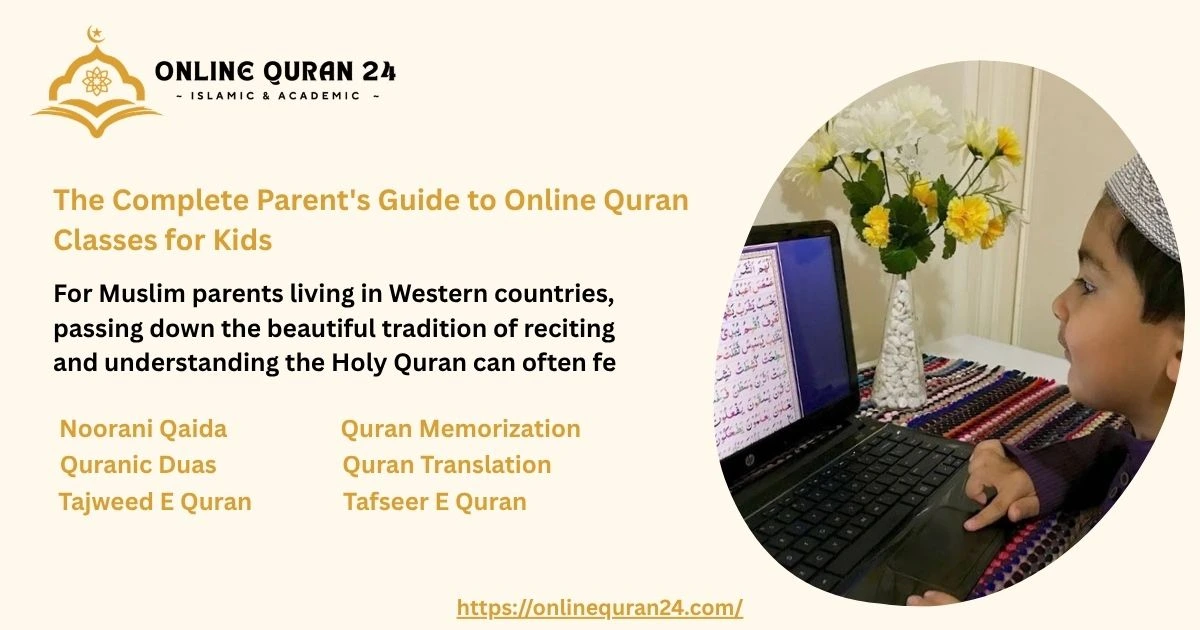
The Complete Parent’s Guide to Online Quran Classes for Kids For Muslim parents living in Western countries, passing down the beautiful tradition of reciting and
Read More »

For Muslim parents living in Western countries, passing down the beautiful tradition of reciting and understanding the Holy Quran can often feel like a logistical challenge. Between school hours, extracurricular activities, and the daily commute, finding a local, qualified Quran teacher is not always easy. This is where Online Quran Classes for Kids have transformed Islamic education.
By bringing certified, expert tutors directly into your home through interactive virtual classrooms, children can now build a profound connection with the Quran from anywhere in the world. Whether your child is starting with the Arabic alphabet or working towards complete memorization (Hifz), online learning provides a structured, safe, and highly personalized environment.
This comprehensive guide will walk you through everything you need to know about setting up your child for success, what a standard curriculum entails, how to find the best tutors, and how platforms like Online Quran 24 are making Islamic education accessible to families globally.
In previous generations, children typically walked to a local mosque or Islamic center for daily after-school lessons. Today, especially for families residing in the United States, United Kingdom, Canada, and Australia, local mosques may be located miles away, and qualified teachers may have overwhelming student-to-teacher ratios.
When a single teacher is managing twenty to thirty students in a room, individual mistakes in pronunciation (Makharij) often go unnoticed. Incorrect recitation habits formed in childhood are notoriously difficult to unlearn as adults. Online Quran classes solve this problem by prioritizing one-on-one attention, ensuring that a child’s foundational reading skills are corrected and perfected in real-time.
If you are considering enrolling your child to study Quran online, you are likely weighing the benefits of virtual learning against traditional in-person methods. Here are the primary reasons parents are increasingly choosing the online route.
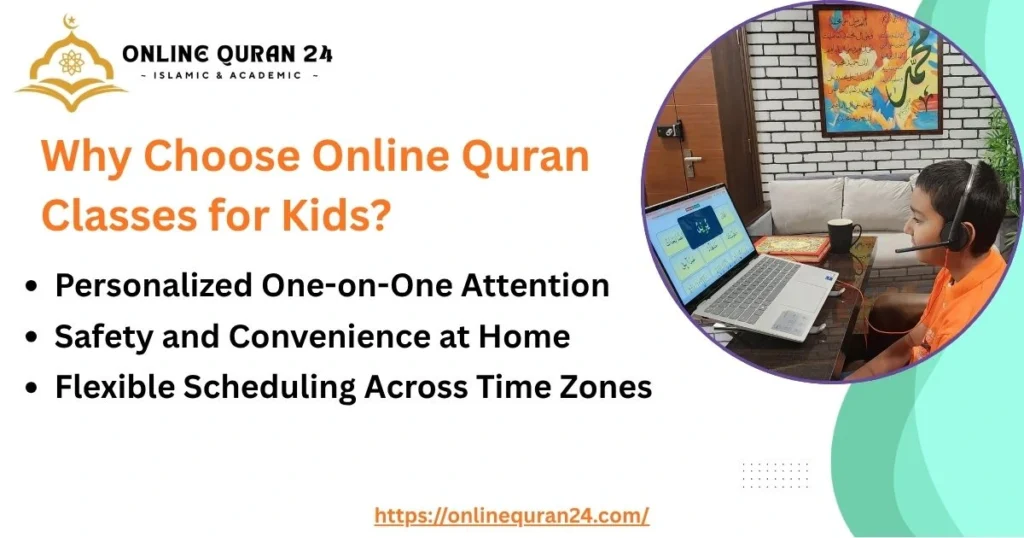
In a virtual classroom setting, it is just the student and the tutor. This means the teacher’s complete focus is on your child’s screen, listening to every syllable they pronounce. If a child struggles with a specific Arabic letter or a Tajweed rule, the teacher can pause the lesson, use interactive screen-sharing tools to highlight the text, and spend the entire session practicing that specific concept without the pressure of keeping up with a larger class.
Safety and comfort are paramount for parents. The best Online Quran Classes for Kids allow children to learn from the security of their own living room or study space. Parents can visually and audibly monitor the lessons, creating peace of mind. Furthermore, it eliminates the stress of commuting through heavy traffic or harsh weather conditions after a long day at school.
Modern life is busy. Quality online academies offer 24/7 availability. Whether you want your child to take a 30-minute lesson before school in the morning or on weekends, you can select a schedule that fits seamlessly into your family’s routine.
One of the most common questions parents ask is regarding the ideal age to begin formal lessons. While every child develops at their own pace, the optimal age to start online Quran classes is generally between 4 and 5 years old.
At this stage of cognitive development, a child’s brain is highly receptive to new languages and phonetic sounds. They can easily grasp the unique pronunciations of Arabic letters without the heavy accents that older learners often struggle to overcome.
For kids aged 4 to 5, the classes begin gently. Lessons are typically kept short (around 30 minutes) to match their attention spans, focusing heavily on interactive visual aids, listening, and repeating the Arabic alphabet.
A structured curriculum is what separates generic tutoring from professional Online Quran classes For Kids. When you enroll your child in an academy like Online Quran 24, they embark on a carefully mapped educational journey.
You cannot build a strong house without a solid foundation. In Quranic education, that foundation is the Noorani Qaida. This beginner’s guide systematically teaches children how to read the Arabic script.
Alphabet Recognition: Learning the 29 letters of the Arabic alphabet and their correct exit points in the throat and mouth (Makharij).
Connecting Letters: Understanding how letters change shape when placed at the beginning, middle, or end of a word.
Vowels and Symbols: Mastering Harakat (short vowels like Fatha, Kasra, and Damma), Sukoon (resting sound), and Shaddah (doubled letters).
Once a child can read joined Arabic words fluently, they transition to reading the Quran with Tajweed. Tajweed refers to a set of rules governing the way the Quran should be read, ensuring it is recited exactly as it was revealed to Prophet Muhammad (PBUH). Children learn advanced rules such as Ghunnah (nasalization), Qalqalah (echoing sounds), and Mudood (prolongations). The goal is to develop a melodic, beautiful, and accurate recitation.
For families wishing for their children to commit the Quran to memory, specialized Hifz programs are available. Memorizing the Quran requires immense dedication, repetition, and routine. Online tutors help students divide chapters (Surahs) into manageable daily portions, combining new memorization (Sabaq) with the constant revision of previously learned verses (Manzil) to ensure long-term retention.
Reciting the Quran is highly rewarded, but understanding its meaning transforms a child’s character. Comprehensive online Quran courses include basic translation and Tafseer (exegesis). This helps older children and teenagers understand the historical context of the verses, the moral lessons embedded in the stories of the Prophets, and the ethical guidelines for daily life.
The best online platforms do not stop at Arabic literacy; they integrate holistic Islamic studies to build a child’s Muslim identity.
Before reciting the Quran, children are taught to recite the Tauz (“A’udhu billahi minash-shaytanir-rajeem“), which means seeking refuge in Allah from the accursed Satan. Following this is the Basmalah.
Teaching the Bismillah meaning—”In the name of Allah, the Most Gracious, the Most Merciful”—is foundational. Tutors explain to children that starting every action in the name of Allah brings blessings and reminds us of His infinite mercy. Understanding these concepts early on helps children incorporate mindfulness of God into their daily routines, from eating meals to sitting down for school exams.
Islamic education provides spiritual tools for emotional resilience. For example, tutors often teach and explain verses like “fa inna ma al usri yusra“ (Quran 94:5), which translates to “Indeed, with hardship, there is ease.” When children face anxiety about school, peer pressure, or personal struggles, understanding the meaning of these verses provides immense comfort. It teaches them that difficult times are temporary and that Allah promises relief. Integrating these profound meanings is what elevates a standard reading class into a life-changing educational experience.
The success of any online learning endeavor relies heavily on the quality of the teacher. A tutor must not only be an expert in Tajweed but must also possess the patience, warmth, and child psychology skills required to keep a young student engaged through a screen.
Many parents, particularly those with young daughters, prefer female instructors. Connecting with the best female online quran tutors provides a highly comfortable, modest, and nurturing environment for girls to learn. Qualified female scholars bring exceptional empathy and patience to the virtual classroom. Furthermore, adult women who wish to learn or revise their Quranic reading often seek out female tutors for their own comfort and privacy, highlighting the importance of academies that offer diverse, highly trained teaching staffs.
Learning online means breaking down geographical barriers, but it also requires academies to understand the cultural and linguistic nuances of their students.
Online Quran courses for UK students and online Quran classes for USA students are highly sought after because the best platforms employ tutors who are completely fluent in English. A common frustration with traditional local teachers is a language barrier that prevents a child from asking complex questions about Islam.
While the primary focus is often on children, it is never too late to begin your own journey with the Book of Allah. Many parents who enroll their children realize they also want to improve their own recitation.
Online Quran Classes for Adults are designed with privacy, respect, and flexibility in mind. Adult learners might feel shy about mispronouncing words in a local mosque setting, making the private, one-on-one virtual environment the perfect solution. Whether you need to start from the Noorani Qaida, wish to memorize specific Surahs for daily prayers, or want to dive deep into Quran translation, studying the Quran online allows adults to progress at a pace that respects their work and family commitments.
Enrolling your child in classes is the first step, but parental involvement dictates the pace of their success. Here is how you can support your child’s online education:
Create a Dedicated Learning Space: Set up a quiet, well-lit area free from televisions, toys, and household distractions. Use a desk and a comfortable chair, and ensure the computer or tablet has a stable internet connection and a good headset.
Establish a Routine: Treat the online Quran class with the same respect as regular school. Consistent class times help children build a habit.
Review the Lessons: Spend five minutes after class asking your child what they learned. If they learned a new Tajweed rule or the translation of a new Dua, ask them to teach it to you.
Stay Connected with the Tutor: Utilize the progress reports provided by the academy. Communicate regularly with the tutor to understand your child’s strengths and areas that require more practice during the week.
Encourage, Don’t Pressure: Learning the Quran is a spiritual journey. Praise their efforts, celebrate small milestones (like completing the Noorani Qaida), and avoid harsh criticisms that might associate negative feelings with Islamic learning.

When it comes to finding a reliable, professional, and engaging platform, Online Quran 24 stands out as a premier destination for families worldwide.
Dedicated to providing an exceptional standard of Islamic education, Online Quran 24 offers specialized programs including Noorani Qaida, Tajweed, Hifz (Memorization), Tafseer, and foundational Islamic Studies.
By choosing Online Quran 24, you gain access to:
Highly Qualified Tutors: Rigorously vetted, certified teachers who are fluent in English and trained in child engagement.
Flexible Scheduling: Classes that adapt to your family’s busy life, regardless of your global time zone.
Customized Curriculum: Tailored lesson plans that match your child’s specific age, learning speed, and goals.
Interactive Learning: Utilizing modern screen-sharing, digital whiteboards, and interactive materials to keep kids focused.
Safe and Transparent Environment: 100% parental visibility into lessons and regular progress tracking.
Taking the step to study Quran online is an investment in your child’s character, faith, and future.
The ideal age to begin structured online Quran classes is typically between 4 and 5 years old. At this age, children can easily absorb new phonetic sounds and begin learning the Arabic alphabet through the Noorani Qaida. However, it is never too late to start; children of all ages and adults can successfully begin their learning journey.
The timeline varies greatly depending on the student’s age, consistency, and the number of classes taken per week. Generally, completing the Noorani Qaida takes about 3 to 6 months. Achieving fluent reading of the entire Quran with basic Tajweed can take anywhere from 1 to 3 years of consistent weekly lessons.
To ensure a smooth learning experience, you will need a laptop, desktop computer, or a high-quality tablet with a stable internet connection. A headset with a built-in microphone is highly recommended, as it helps the teacher hear your child’s pronunciation clearly and blocks out background noise in your home.
Absolutely. One of the main benefits of online learning is transparency. Parents can sit nearby during the virtual classes. Additionally, professional academies provide regular feedback, weekly or monthly progress reports, and direct lines of communication with the tutors so you always know exactly how your child is advancing.
Yes, reputable platforms like Online Quran 24 prioritize comfort and modesty by offering a wide selection of highly qualified female Quran tutors. These teachers specialize in creating a nurturing environment for young girls and provide a private, comfortable space for adult women to study and perfect their recitation.