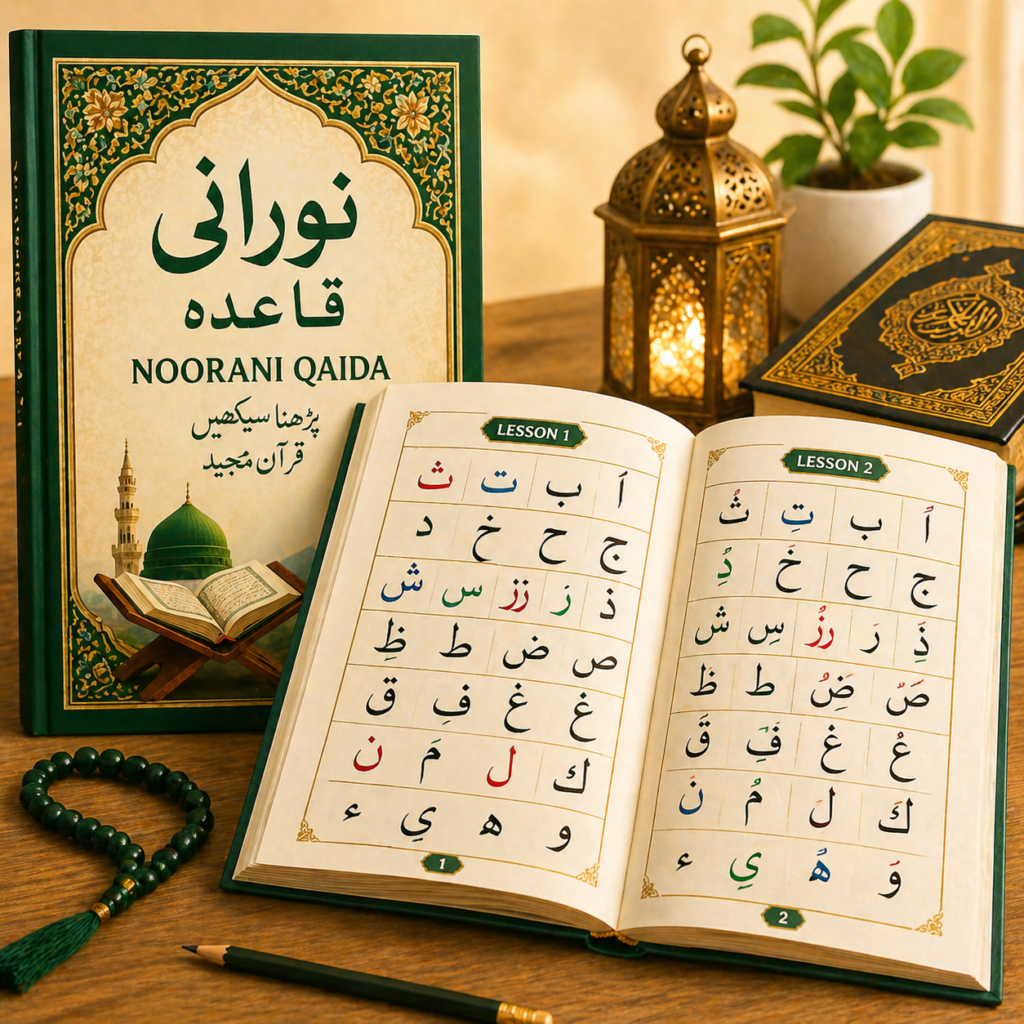
Yes. Beginners with no Arabic background can learn Arabic starting from English, because Online Quran 24 teachers explain Arabic letters, sounds, and grammar concepts using English as the instruction language, building up gradually from the alphabet to full recitation at a pace set by the individual student.
This is one of the most common starting points for our students. A teacher will introduce each Arabic letter and sound, connect it to something familiar, and only move forward once the student is comfortable — so there’s no assumption of prior knowledge at any stage.
Why Choose an Arabic Language Tutor?
A live Arabic Language Tutor corrects pronunciation in real time — something apps and pre-recorded videos can’t do. Tajweed rules depend on precise sounds, and a tutor can hear and fix small errors immediately, before they turn into habits that are much harder to unlearn later.
A tutor also adjusts the lesson to the student: slowing down for a child who’s struggling, moving faster for an adult who’s picking it up quickly, and answering questions as they come up instead of leaving a learner stuck.
Are Online Arabic Courses Effective?
Online Arabic courses can be just as effective as in-person classes when they’re live and one-on-one, because the teacher can hear the student, correct mistakes immediately, and adjust the pace — the same things that make in-person learning work, regardless of where either person is sitting.
What matters most is the format, not the location: a live teacher watching and listening in real time (as opposed to a recorded video or app) is what drives progress. That’s the model we use for every course, from Noorani Qaida through Hifz.
Scheduling Classes Across Time Zones
Online Quran 24 serves Muslims worldwide, so classes are scheduled around the student’s own time zone rather than a fixed academy timetable. This includes online Quran classes for USA students in evening or weekend slots, and online Quran classes for UK students at times that fit around school and work.
If a class time stops working — a new job, a school term change, Ramadan hours — schedules can be adjusted with your teacher directly.
Choose Your Teacher: Female or Male Options
We offer both female Quran teachers online and male Quran teachers, and students or parents can request a preference when signing up. This is especially relevant for female students and for parents who want a same-gender teacher for their daughters.
Whether you’re looking for the best male Quran teacher online for a son, or a female tutor for a daughter or for yourself, teacher matching takes this into account from the first trial lesson — the goal is simply to find the best quran teacher online fit for that student, not a one-size-fits-all assignment.
Quran Studies Alongside Arabic: Tajweed, Tafsir & Recitation
Arabic and Quran study go hand in hand at Online Quran 24. As reading and vocabulary improve, most students move naturally into Tajweed e Quran (recitation rules), Qira’at (recitation styles), and eventually tafseer e Quran (interpretation).
For students who want meaning as well as recitation, we also offer Quran translation alongside memorization, so a student isn’t only reciting Quran with memorization and tafsir but understanding it as they go.
Final Thoughts
Learning Arabic language online works best when it’s live, one-on-one, and paced to the actual student — not a recorded course or an app drilling flashcards. That’s the approach Online Quran 24 has used with 350+ students over 5 years, across Noorani Qaida, Tajweed, Hifz, Tafsir, and Quran translation, for kids, adults, beginners, and reverts alike.If you’re weighing whether an Arabic Language Tutor is worth it, the free 3-day trial is the easiest way to find out — you’ll sit in on real lessons before deciding anything.
FAQs About Arabic Language