Introduction to Qira'at
For more advanced students, we introduce Qira’at — the different authentically transmitted ways of reciting the Quran — building on a strong Tajweed foundation.
Quran Translation, Duas & Islamic Studies
Recitation and memorization are the core of most students’ journey, but they are not the whole picture. For students who want to go further, we also offer Quran translation study, so the meaning of what is being recited is clear, along with Quranic duas and broader Islamic studies topics. These are usually introduced once a student is reading comfortably.
What Are the 7 Types of Qirat?
Qira’at refers to the different, authentically transmitted ways of reciting the Quran, each traced back through an unbroken chain to the Prophet Muhammad. Scholars recognize seven major qira’at, sometimes called the 7 Qirat of Quran or Qira’at Sab’ah in Arabic. They differ mainly in pronunciation and vowelling, not in meaning.
The seven reciters most commonly referenced are:
- Nafi’ al-Madani
- Ibn Kathir al-Makki
- Abu Amr al-Basri
- Ibn Amir al-Shami
- Aasim al-Kufi (the riwayah of Hafs ‘an ‘Aasim is the most widely recited today)
- Hamzah al-Kufi
- Al-Kisai al-Kufi
How to Learn Qirat of Quran?
Learning Qira’at starts with solid Tajweed and confident, fluent Quran recitation — Qira’at is not usually where a student begins. From there, a qualified teacher introduces the differences between riwayahs gradually, through listening, repetition, and live correction, since accurate Qira’at depends on a teacher’s ear, not self-study alone.
A typical path looks like this:
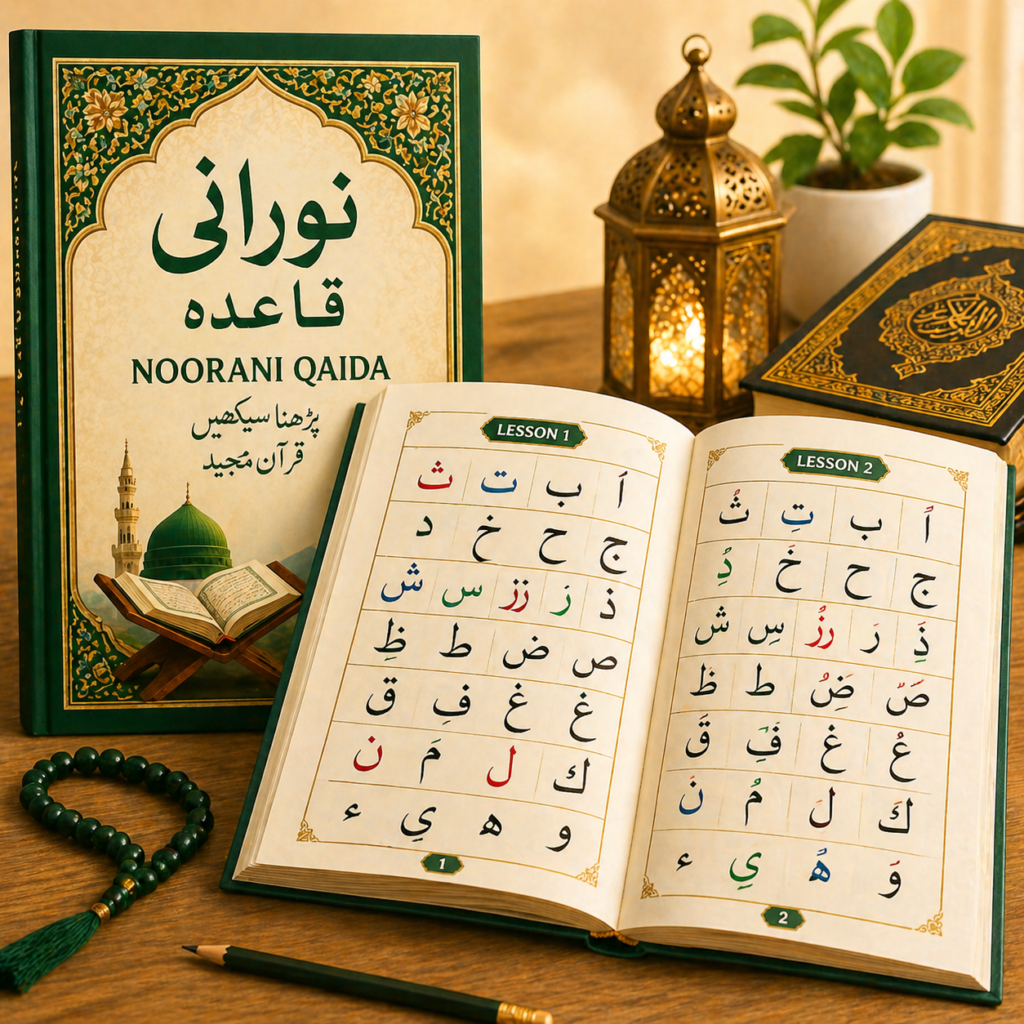
- Build a strong foundation in Noorani Qaida and Tajweed
- Reach fluent, confident Quran recitation
- Study one riwayah in depth (most commonly Hafs ‘an ‘Aasim)
- Progress to comparing other qira’at, if the student wants to continue
Our online Qirat course follows this same structure, one-on-one, so a student never moves ahead of what they have actually mastered.
Best Online Quran Recitation Classes: Format & Scheduling
Classes are one-on-one and held live online, rather than in pre-recorded lessons or large group sessions. Because we teach students across the world, scheduling is built around the student’s own time zone rather than a single fixed timetable.
What this looks like in practice:
- Live, one-on-one video classes with a dedicated teacher
- Scheduling arranged around the student’s time zone, wherever they are
- A consistent teacher for continuity, rather than a rotating roster
Qira'at, Learn Quran Online: Pricing & Free Trial
We offer a 3-day free trial, so a new student or parent can sit in on a real class, meet a teacher, and check that the schedule works, before deciding on anything further. For current course fees, please get in touch directly, since pricing can depend on course type and schedule.
Is a Free Trial Class Available at Online Quran 24?
Yes. Online Quran 24 offers a 3-day free trial so new students can experience a live Quran recitation class, meet a tutor, and see whether the schedule and teaching style are a good fit, before enrolling in a paid course.
Final Thoughts
Learning Quran recitation online works best when it is personal, consistent, and paced to the student rather than a syllabus. That is the approach Online Quran 24 has followed for 5 years, with more than 350 students taught so far, from Noorani Qaida through to Tajweed, Hifz, Tafsir, and Qira’at.If you are unsure whether it is the right fit, the 3-day free trial is there for exactly that reason. You can try a real class, with a real teacher, before deciding on anything else.
Whether you are looking for a Quran recitation course online for your child, a way to finally start (or restart) as an adult, or a structured online Qiraat course to go further with Qira’at, the same starting point applies: book a free trial class and see how it feels before committing to more.
FAQs About Quran Recitation